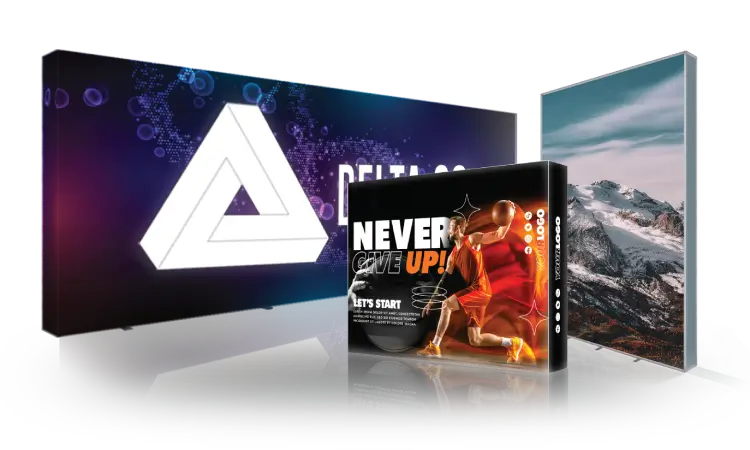
Step 1: Determine Your Display Purpose & Environment
Start by identifying where and how your LED backlit display will be used. Key Considerations
- Event Type: Trade shows, conferences, retail environments, showrooms, and brand activations.
- Visibility Needs: Ideal for high-traffic or low-light environments where brightness matters.
- Portability: Freestanding units are easy to transport; larger modular builds are best for repeat events.
- Single vs Double-Sided: Choose double-sided for island booths or open spaces.
Step 2: Choose Your Size & Configuration
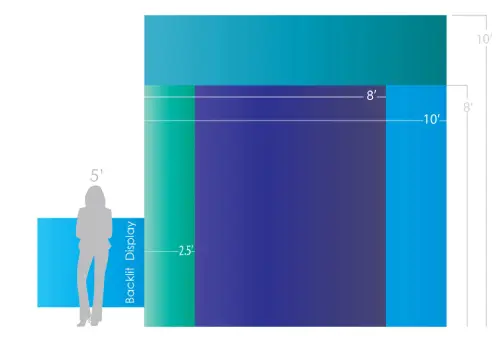
Select the size and configuration that best fits your space, visibility needs, and setup requirements. Common options include.
- Portable LED Backlit Displays (2.5ft–10ft wide): Ideal for 10x10 booths, pop-ups, and retail spaces requiring fast, tool-free setup
- Inline & Modular LED Backwalls (10ft–40ft wide): Best for trade shows and events needing maximum visual impact.
- Straight vs Curved Displays: Straight displays offer clean, modern branding; curved displays help draw attention from multiple angles
- Single or Double-Sided Graphics: Choose double-sided for open floor plans or island booths
Most Bright LED Backlit Displays use SEG (Silicone Edge Graphics), which provide a wrinkle-free finish but require additional setup time compared to standard tension fabric displays.
Step 3: Add Lighting, Accessories & Enhancements
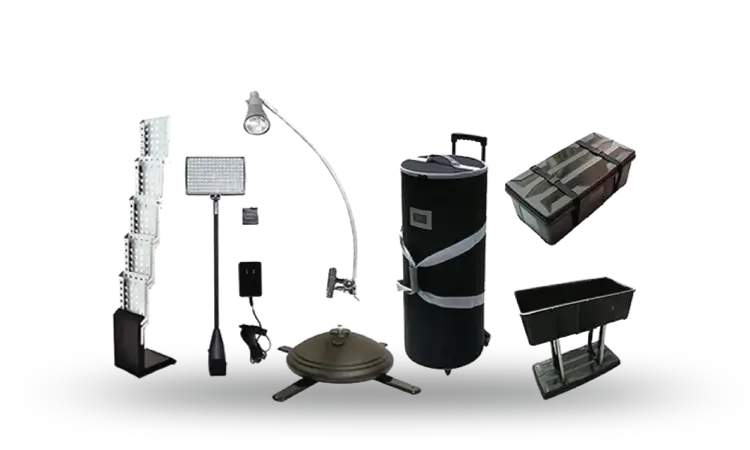
Accessories help elevate your LED display and improve functionality on the show floor.
Popular Add-Ons & Why They Matter
- LED Display Lights: Enhance brightness in large halls or brightly lit venues
- Counters & Storage Units: Add functionality for product demos and storage
- Monitor & TV Mounts: Integrate video content alongside illuminated graphics
- Hard or Rolling Cases: Protect LED panels during transport and simplify logistics
These add-ons are especially recommended for larger displays, high-traffic environments, and multi-day events.