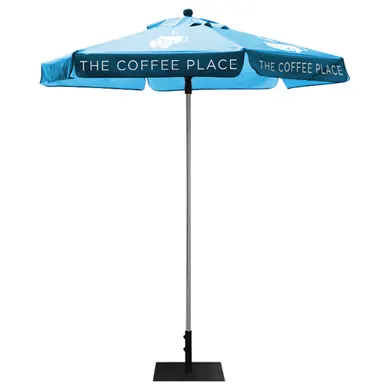
Step 1: Select Your Size & Shape
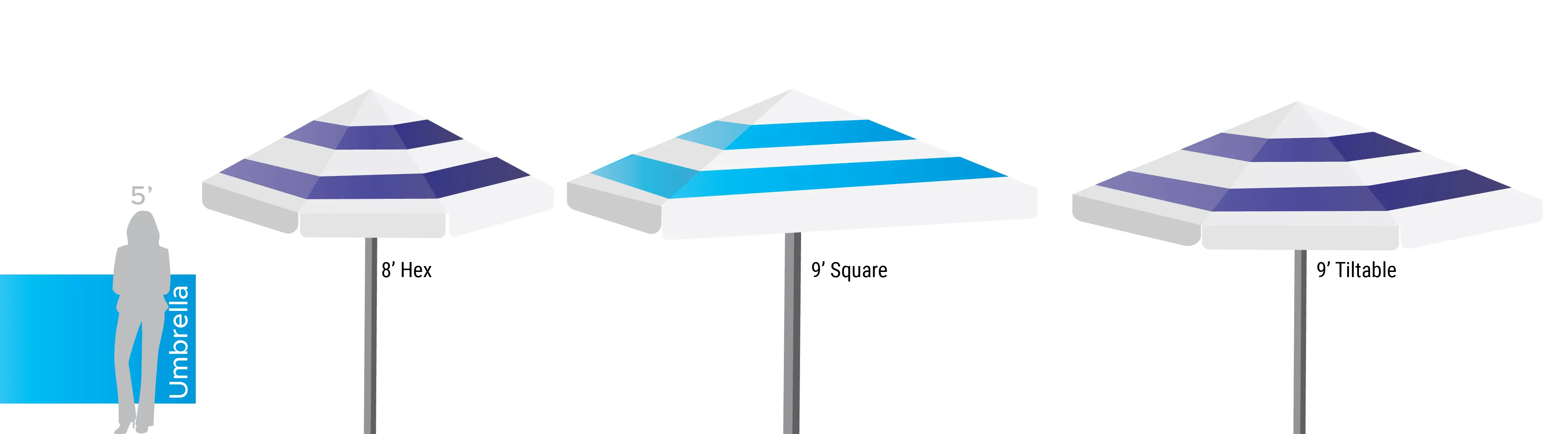
Choosing the correct size ensures you get the right coverage for your outdoor space.
- Diameter / Size Options:
- Smaller spaces or single table: ~8 ft diameter
- Larger areas or multiple seats: ~9 ft diameter
- Consider how much shade you want and where it will be placed
- Shape Options:
- Hexagonal / Round — classic, even shade coverage
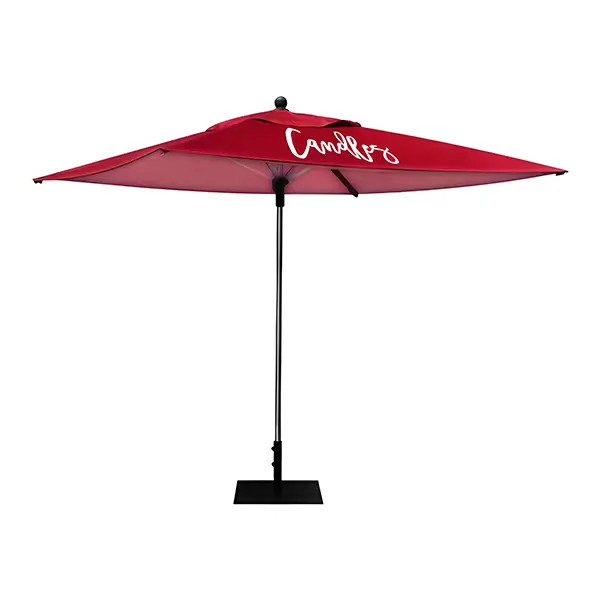
- Square — great for rectangular tables and patio zones
Matching the size and shape to your seating or outdoor area maximizes comfort and shade effectiveness.
Step 2: Choose Tilt & Feature Options
Next, decide whether you want your umbrella to adjust as the sun shifts:
- Fixed (No Tilt): Sturdy and simpl
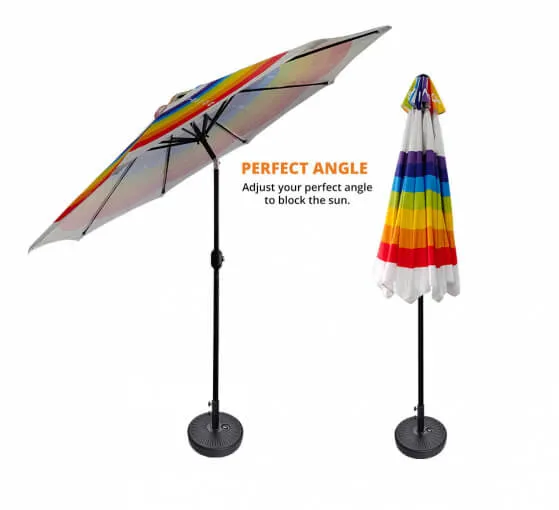
- Tiltable: Lets you angle the canopy for better shade throughout the day
If sun angle changes are expected (morning vs evening shade), a tilt option provides more flexibility.
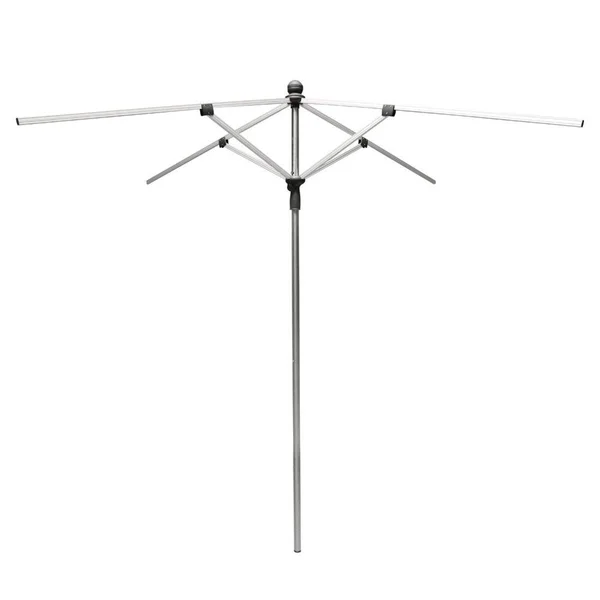
Step 3: Determine Your Pole & Frame Material
The durability and performance of your umbrella depend on what it’s made of:
- Stainless Steel + Commercial-Grade Aluminum: Rust-resistant, built to withstand commercial outdoor use.
- Aluminum-Only Construction: Lightweight and weather-resistant.
Step 4: Choose Your Base Type
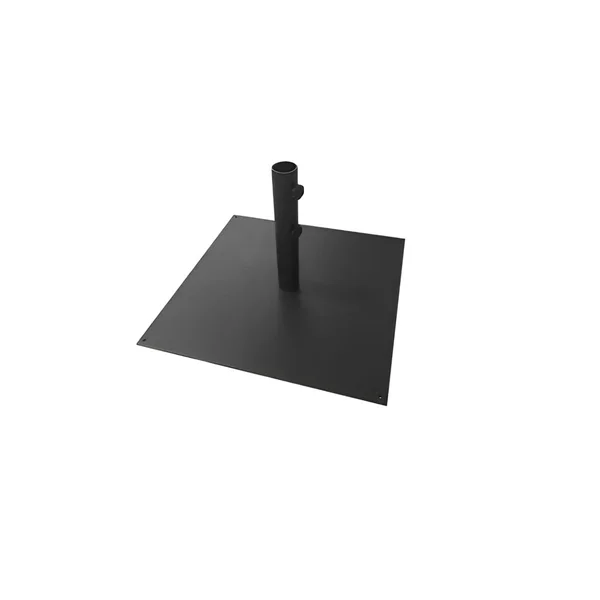
Bases help keep your umbrella secure and upright, essential for larger umbrellas or public spaces.
- Choose a heavy-duty umbrella base for stability in wind or high-traffic areas
- Lighter or standard bases work for more controlled environments
- Easy assembly with durable, long-lasting components
Step 5: Customize Your Design
Make your umbrella a branding asset:
- Full-Color Printed Canopy: Showcase logos, brand colors, and messaging
- Optional Valances: Add extra design space around the edges
Custom printing turns functional shade into eye-catching outdoor advertising.